
Child Therapy for Divorce and Parental Loss in Santa Monica & Los Angeles
The dissolution of a family through divorce or the death of a parent is one of the most significant experiences a child can face. Children process loss very differently from adults, and they need developmentally appropriate support to make sense of what has happened, manage their feelings, and maintain the sense of security they need to continue growing.
Dr. Sally Hackman, PhD, MFT, has extensive experience helping children in Santa Monica and Los Angeles navigate divorce and parental loss with a deep understanding of child development and the specific ways grief and family disruption affect children at different ages. Childern under 5 years old and puberty age are in the most developmentally fluid stages rendering them the most vulenerable to development being thrown off track. Early intervention at the time of the divorce or loss helps prevent or deal with derailment of development and lessens the life long impact period.
What Children Understand at Different Ages
Under Five
Very young children do not understand that death is permanent. They may ask when the parent is coming back, repeatedly, long after being told. They are not being difficult the concept has not formed yet. They are also highly attuned to the remaining parent’s distress, and often become clingy or regress in toileting, sleep or speech.
Five to Eight
Children begin to grasp that death is permanent, but often believe it happened because of something. Something they said, something the wished, something they did not do. Many carry this silently for years because it feels too shameful to say out loud. Magical thinking is common at this age. So is worrying that the remaining parent will die too.
Eight to Twelve
By now children understand fully, and many respond by taking responsibility. They become the helper, the one who does not add to the burden, the one who is fine. This is worth watching. A child who is managing everything beautifully at ten may be doing so because they have concluded there is no room for them to fall apart.
Teenagers
Adolescents grieve much as adults do, but with less privacy and more complication. Some pull away from the family entirely, grieving with friends or alone. Some become angry at the parent who died, at the parent who is left, at everyone. Loss at this age can also collide with the ordinary work of separating from parents, and that collision is genuinely confusing for them.

Grief in Children Does Not Look Like Grief in Adults
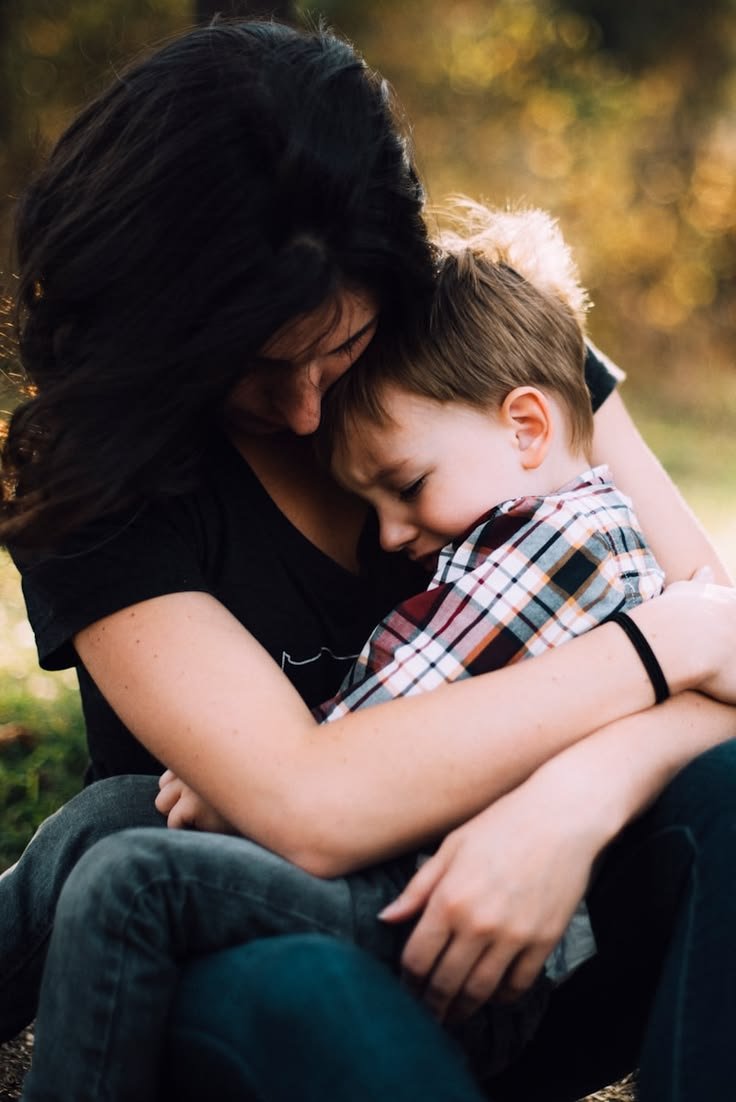
The biggest difference is that children grieve in bursts. A child can be sobbing one minute and asking for a snack the next. They can hear that a parent has died, take it in, and then go and play. Many adults find this frightening it can look like the child does not understand, or does not care. They do. Children simply cannot stay in grief for long stretches; they go in and come out, over and over, sometimes for years. The other difference is that it often shows through behaviour rather than words. Regression to younger habits. Anger. Clinginess. Trouble sleeping. Difficulty at school. A child who cannot say “I am devastated” may show it by refusing to get dressed. None of this means something is going wrong. It is what grief looks like at that age.
The Questions Children Ask
Children ask direct questions, often at inconvenient moments, and often more than once. Did it hurt. Where are they now. Will you die too. Was it my fault. Can I still have a birthday. Answer plainly and honestly, in language suited to their age, and without more detail than they asked for. Saying you do not know is allowed, and is better than an answer you will have to correct later. Use the real words. “Died” rather than “gone to sleep” or “lost.” Euphemisms confuse young children and can create new fears a child told someone went to sleep may become frightened of bedtime. And expect the same question again next month. Repetition is how children process, not a sign they were not listening.
When a Parent Leaves Rather Than Dies
Where a parent has gone through separation, estrangement, or simply absence children face something that is often harder to carry than death. With death there is at least a reason that is not about them. When a parent chooses to leave, or stops coming, a child is left with a question that has no acceptable answer: why was I not enough. There is also no ritual for it. No funeral, no acknowledgement, nobody asking how they are doing. The work here is different, and much of it is about helping a child hold a loss that the world around them does not treat as one.
How Therapy Helps
Children often protect the parent they still have. They see you struggling and decide not to add to it and so the grief goes somewhere else, or nowhere. A therapy room is somewhere it can go that costs you nothing. Your child can be angry at the parent who died without worrying how that lands. They can say they are relieved, or that they have started to forget a face, or that they are frightened you will die too. With younger children this happens through play and drawing rather than conversation. With older children and teenagers it is more direct, though it still moves at their pace. Dr. Hackman also meets with parents separately to talk through what your child is showing, what to say, and how to manage the days that are harder than others.
Supporting a Child While Grieving Yourself
This is the part nobody prepares you for. Let them see you sad. Children who never see a parent grieve conclude either that they should not be sad themselves, or that the person who died did not matter much. Crying in front of your child is not a failure; falling apart alone in another room every time is harder on them. Keep some routine, even a thin one. Meals, bedtime, school. Predictable structure does more for a grieving child than anything you say. Tell the school.

Key Points
Helping Your Child Through Loss.

Empowering Resilience
Help your child process their grief and make sense of family change in ways that are appropriate to their age and development building the emotional resilience to carry forward.

Healing Space
A warm, child-friendly space that is entirely the child's own separate from adult conflict and family stress where children can express their feelings freely.

Transformative Support
Dr. Hackman maintains close parent consultations alongside child therapy helping parents understand how to talk to their children about divorce or death, and how to support their children's emotional needs at home.
When to Get Help Sooner
Grief itself is not a problem to be fixed. Most children, given time and steady adults, find their way through it. Speak to someone without waiting if your child has stopped doing things they normally do and has not started again after several weeks, if they have withdrawn from friends entirely, if their sleep or eating has changed markedly, if school has collapsed rather than dipped, if they are showing intense guilt or blame, or if they seem to have had no reaction at all. If your child says anything that worries you about hurting themselves, contact your pediatrician, or call or text 988 the Suicide and Crisis Lifeline rather than waiting for an appointment.
Arranging a First Conversation
The first step is a conversation with you, not your child. If you are not sure whether what you are seeing is ordinary grief or something that needs more, that is a reasonable thing to ask about. Dr. Hackman works with children, teenagers and parents from Santa Monica, Brentwood, Pacific Palisades and West Los Angeles.
Call (747) 243-4897
0
+
Years of Child Therapy Experience
0
Serving Santa Monica Continuously
0
%
Confidential — Always
0
$
First Session Free If You Don't Return

FAQs
Common Questions
Most children do better being included, provided they are prepared for what will happen and have an adult whose only job is to look after them and take them out if needed. Being excluded often leaves children feeling shut out of something important. Give them a genuine choice where they are old enough to make one.
Usually not. Children grieve in bursts and can appear unaffected for long stretches. Some do not react for months. What is worth attention is a child who is functioning noticeably worse withdrawing, not sleeping, struggling at school rather than one who seems to be carrying on.
There is no fixed point. Some families find it useful straight away; others wait months. What matters more is whether your child has somewhere to put it. If you are unsure, an early conversation with a parent alone is a reasonable step, and does not commit your child to anything.
Yes. Loss through a parent leaving is covered here too, and in some ways is harder for children because there is no acknowledgement of it. If the situation is a divorce where both parents remain involved, the page on how divorce affects children may fit better.
If you can, yes. Parents supporting a grieving child are usually grieving too, and there is a limit to how long that works without somewhere of your own to put it. Dr. Hackman also works with adults through grief and loss.