
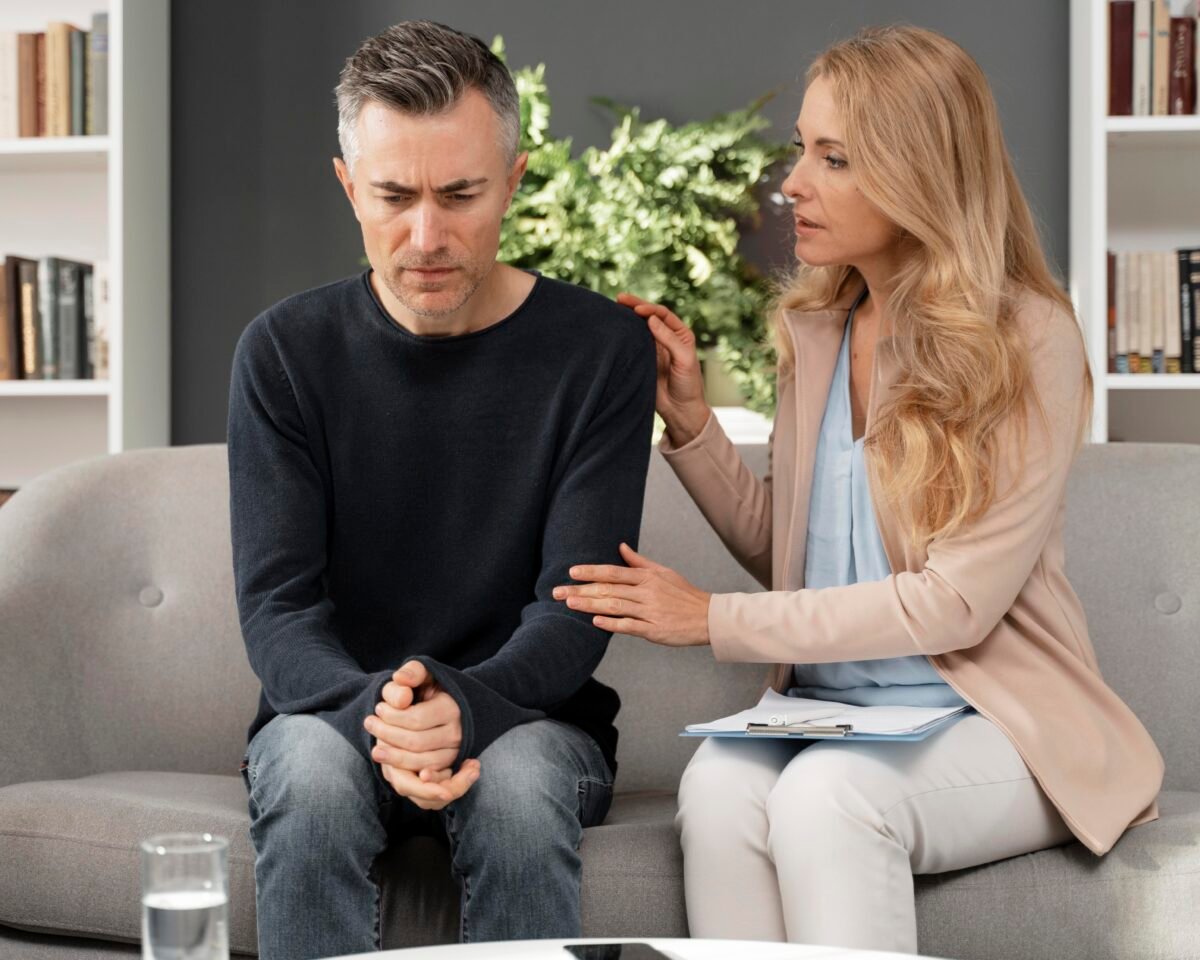
You improve communication in a relationship by slowing down conversations, listening to understand rather than to respond, and replacing blame with specific requests. Most communication problems are not about a lack of love, they are about unspoken assumptions, timing, and old patterns that get triggered under stress. Couples therapy can help when these patterns repeat despite good intentions.

Introduction
Almost every couple argues about the same handful of topics: money, chores, time, family, and feeling unheard. What separates couples who grow closer from couples who grow apart is usually not the topic itself, it is how they talk about it.
If conversations with your partner keep turning into arguments, or you have stopped bringing things up at all, this guide breaks down why communication breaks down, what actually helps, and when it makes sense to bring in a professional. It reflects patterns commonly seen in relationship counseling, including the practice of Dr. Sally Hackman, a licensed psychotherapist in Santa Monica, California.
Why Does Communication Break Down in Relationships?
Communication usually breaks down for a handful of predictable reasons, not because partners stop caring.
- Different conflict styles. One partner may want to talk things through immediately, while the other needs time to process, which can look like avoidance or dismissal.
- Flooding. When a nervous system becomes overwhelmed during conflict, people say things they do not mean or shut down entirely.
- Unspoken expectations. Assuming a partner should “just know” what you need often leads to disappointment and resentment.
- Old patterns from earlier relationships. Many adults unconsciously repeat communication habits learned in their family growing up, even when those habits do not serve their current relationship.
- Timing and setting. Important conversations that happen when tired, rushed, or in front of others rarely go well.
Signs of a Communication Breakdown
You may be dealing with a communication breakdown if you notice:
- The same argument repeating with no resolution
- One or both partners withdrawing or giving the silent treatment
- Conversations escalating quickly into criticism or defensiveness
- Avoiding certain topics entirely to prevent conflict
- Feeling more like roommates than partners
- Assuming the worst about your partner’s intentions
Relationship researcher John Gottman’s work has identified specific patterns, often called criticism, contempt, defensiveness, and stonewalling, as strong predictors of relationship strain when they become habitual rather than occasional.
7 Practical Ways to Improve Communication
- Use a soft startup. Begin difficult conversations with how you feel and what you need, rather than an accusation. “I felt overlooked when plans changed without a heads up” lands differently than “You never think about me.”
- Set a time to talk. Agree on a moment when both partners are calm and available, rather than raising sensitive topics in passing or during an already tense moment.
- Practice reflective listening. Repeat back what you heard before responding. This slows the conversation and confirms you understood correctly before reacting.
- Take a break when flooded. If either partner’s heart rate spikes or the conversation feels unproductive, pause for at least twenty minutes before continuing, rather than pushing through.
- Make specific requests. “Can we plan Sunday dinners together” is easier to act on than “You never make time for us.”
- Separate the person from the problem. Focus on the specific behavior or situation rather than character judgments like “you always” or “you never.”
- Schedule regular check ins. Short, low pressure conversations about how the relationship is going can prevent small frustrations from building into larger conflicts.
Communication Habits: Helpful vs Unhelpful
| Helpful habit | Unhelpful habit |
|---|---|
| Using “I” statements | Leading with blame or “you always” |
| Taking a break when overwhelmed | Continuing to argue while flooded |
| Asking clarifying questions | Assuming you know what your partner meant |
| Addressing one issue at a time | Bringing up past unrelated conflicts |
| Validating feelings before problem solving | Jumping straight to solutions or defending yourself |
When Should You Consider Couples Therapy?
Self help strategies work well for many couples, but professional support is worth considering when:
- The same conflict has repeated for months without improvement
- One or both partners feel consistently unheard or resentful
- Trust has been broken, such as through infidelity or dishonesty
- Conversations quickly turn into shouting, stonewalling, or shutting down
- You want an objective third party to help identify patterns you cannot see on your own
Couples therapy is not only for relationships in crisis. Many couples attend proactively, before a marriage, during a major transition such as a new baby, or simply to strengthen a relationship they already value.
What Happens in Couples Counseling?
A typical first session usually includes the following steps.
- Joint intake. The therapist meets with both partners to understand the relationship history and current concerns.
- Identifying patterns. Rather than assigning blame, the therapist helps both partners see the cycle that keeps repeating, such as one partner pursuing and the other withdrawing.
- Building new skills. Sessions often include structured communication exercises practiced both in session and at home.
- Individual sessions when useful. Some approaches include occasional individual sessions to explore how each partner’s history shapes their communication style.
Common Mistakes Couples Make When Trying to Communicate Better
- Trying to “win” the conversation instead of trying to understand each other
- Bringing up multiple grievances at once, which overwhelms the original issue
- Waiting until resentment builds before raising a concern
- Assuming therapy is a last resort, when earlier support often prevents bigger problems
Key Takeaways
- Most communication breakdowns come from mismatched conflict styles, flooding, and unspoken expectations, not lack of love.
- Recognizable patterns such as criticism, contempt, defensiveness, and stonewalling are strong signs communication needs attention.
- Soft startups, reflective listening, and specific requests are practical tools that improve most conversations.
- Couples therapy helps most when the same conflict repeats over time or when trust has been broken.
- Couples counseling focuses on identifying cycles and building new skills, not assigning blame.
Frequently Asked Questions
How do I get my partner to communicate better if they shut down during conflict?
Shutting down is often a stress response, not disinterest. Try pausing the conversation and revisiting it later when both partners are calmer, and ask directly what would help them feel safe enough to stay engaged.
Is it normal for couples to argue often?
Occasional disagreement is normal and even healthy. What matters more is how conflict is handled. Frequent arguing becomes a concern when it involves contempt, stonewalling, or the same unresolved issue repeating without progress.
Can bad communication habits actually be changed?
Yes. Communication patterns are learned, which means they can be unlearned with consistent practice. Many couples see meaningful improvement within a few months of applying new skills and, when needed, working with a therapist.
What is the difference between individual therapy and couples therapy for relationship issues?
Individual therapy focuses on one partner’s patterns, history, and reactions. Couples therapy involves both partners together and focuses on the dynamic between them. Some people benefit from both at different times.
How long does couples therapy usually take?
This varies by couple and goals. Some couples see improvement in a few sessions focused on a specific issue, while deeper patterns tied to trust or long standing conflict often take several months of consistent work.
Should we wait until things get really bad before starting couples therapy?
No. Couples therapy tends to be most effective when started before resentment builds significantly. Many couples benefit from starting during a difficult transition or a pattern of recurring conflict, rather than waiting for a crisis.
Can one partner attend therapy alone if the other refuses to go?
Yes. Individual therapy can still help you understand your own patterns, communicate more effectively, and decide how to approach the relationship, even without your partner present.
Conclusion
Better communication rarely comes from trying harder in the moment. It comes from understanding the patterns underneath the arguments and practicing new habits consistently over time. If the same conflicts keep resurfacing despite your best efforts, that is a common and treatable pattern, not a sign the relationship is broken.
Dr. Sally Hackman has worked with couples in Santa Monica for over three decades, helping partners rebuild communication and reconnect using approaches grounded in attachment theory and relational therapy. If recurring conflict has you and your partner feeling stuck, reach out to schedule a free first session and see how couples counseling could help.